Artificial intelligence can write, summarize, generate images, organize information, translate language, and produce a first draft in seconds.
That changes the value of speed.
It does not eliminate the value of being human.
The deeper shift is this: AI will expose the difference between people who can use a tool and people who can think.
When production becomes easier, judgment becomes more visible. When answers become abundant, the quality of the question matters more. When anyone can generate content, taste, context, ethics, and original insight become harder to fake.
Students need more human capability in an AI world, not less.
AI Can Produce. Humans Still Have to Decide.
An AI system can generate ten options. It cannot carry human responsibility for choosing the right one.
That choice requires context. Who is affected? What is the goal? What information is missing? What could go wrong? Does the answer fit the community, the moment, and the values involved?
These are not software questions. They are judgment questions.
UNESCO’s student AI framework puts human agency and accountability at the center for a reason. Students must understand that AI is built and directed by people, and that human choice should not be surrendered in high-stakes decisions.
The tool can assist. The person remains responsible.
Weak Questions Create Polished Mistakes
AI is often confident, fast, and wrong in ways that look convincing.
That means students cannot measure intelligence by how professional an answer sounds. They need the discipline to verify information, challenge assumptions, compare sources, and notice when an answer does not fit the situation.
This is where Own Your Mind becomes essential.
Students should use AI without outsourcing their beliefs to it. They should be able to say, “This is useful,” “This is incomplete,” or “This does not make sense,” even when the response looks polished.
The future belongs to people who can work with machines without becoming mentally dependent on them.
Taste Becomes a Competitive Advantage
AI can create more options than a person could review in a day. That does not mean every option is good.
Taste is the ability to recognize what fits, what feels original, what is emotionally true, and what deserves to exist.
Taste comes from attention, history, culture, practice, and exposure. It develops when students study strong work, make their own work, receive feedback, and learn why one choice lands while another feels empty.
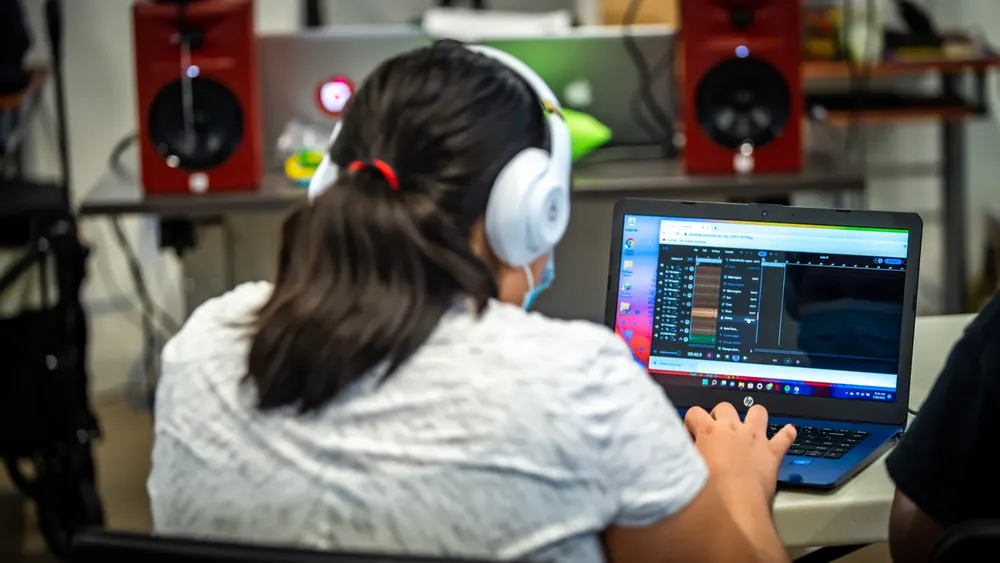
In music, anyone can generate a loop. A producer still has to decide which sound carries the emotion, what to remove, and when the song is finished.
Abundance raises the value of selection.
Context Is the Human Layer
AI works from patterns in data. Human beings live inside situations.
A recommendation that makes sense in one school may fail in another because the culture, resources, trust, timing, or student needs are different. A technically correct answer can still be strategically wrong.
Situational awareness, systems thinking, temporal awareness, and history help students understand why context changes the decision.
The person who knows the community can see what the model cannot.
That local understanding is not a minor detail. It is part of the intelligence.
Ethics Cannot Be an Afterthought
The ability to create something does not answer whether it should be created.
Students need to ask who benefits, who carries the risk, what data was used, whose voice is missing, and what happens if the system fails.
Ethical thinking requires the ability to hold nuance. AI can be useful and harmful. Efficient and unfair. Creative and derivative.
Two truths can exist at the same time.
Mature thinking does not run from that tension. It works through it.
AI Makes Intellectual Discipline More Important
If a tool can summarize the book, why read it?
Because a summary gives you conclusions. Deep learning gives you structure, context, contradiction, and the ability to form your own interpretation.
Own Your Intellect means continuing to learn even when a machine can produce a quick answer. It means understanding enough to recognize quality, ask better follow-up questions, and improve the output.
AI can accelerate learning. It can also create the illusion of learning.
Students have to know the difference.
The New Human Advantage
The goal is not to compete with AI at being fast. Machines will usually win that race.
The human advantage is the ability to connect meaning, context, values, experience, and responsibility.
That includes judgment. Taste. Ethics. Leadership. Curiosity. Agency. Focus. Communication. Original insight.
These capabilities are not soft skills. They are the control layer for powerful technology.
We should teach students how to prompt, build, and create with AI. We should also teach them when not to use it, how to challenge it, and how to remain the author of the decision.
AI will not make human development less important.
It will expose where human development is missing.
Research: UNESCO AI Competency Framework for Students | OECD Learning Compass 2030